
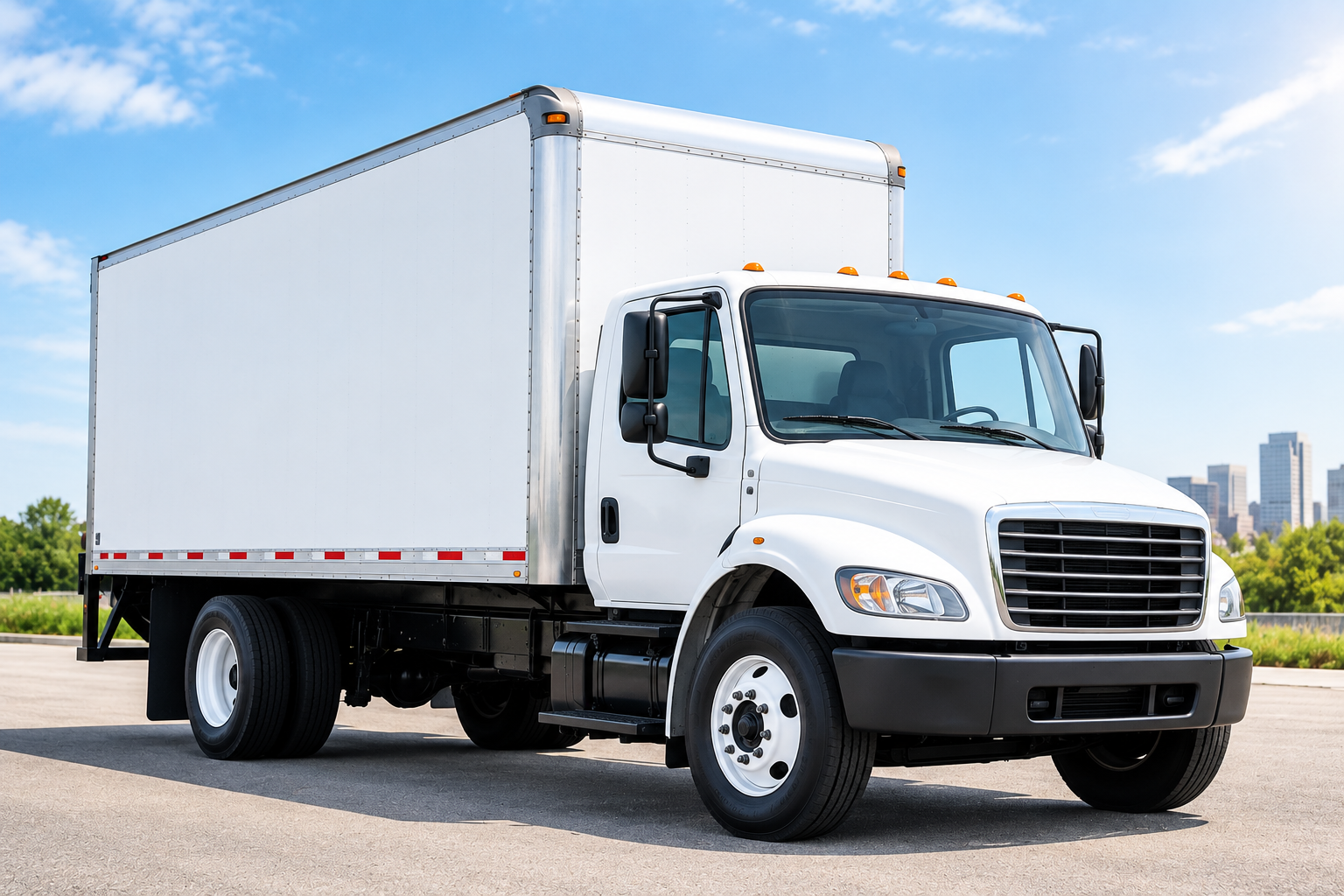
A box truck is the kind of vehicle you’ll often see making furniture deliveries, moving jobs, and local business runs. What is a box truck? It’s a commercial vehicle with a cab in front and an enclosed cargo body behind it, giving you more room than a cargo van without moving up to a tractor-trailer.
If you’re shopping for your first box truck, start with the work you need it to handle. Think about what you’ll be hauling, where you’ll be driving, how much you can spend, and whether you need equipment such as a liftgate.
Key Takeaways
- Box trucks combine the cab and enclosed cargo body into one vehicle.
- Common box lengths range from about 10 to 26 feet.
- Box truck cost depends on age, mileage, condition, size, and equipment.
- Used trucks need to be checked for both current condition and deferred maintenance.
- CDL requirements depend on the vehicle and how it’s operated.
What Is A Box Truck Used For?
The enclosed cargo body protects products from weather and road exposure. That makes them useful for local and regional delivery work.
Typical uses include:
- Furniture and appliance delivery
- Retail distribution
- Moving services
- Local deliveries
- Food and beverage delivery
- Business equipment
- Event equipment
- LTL freight
What you need from the truck will depend on the work. An appliance company, for example, may need a liftgate and enough payload for heavier items. If most of the deliveries are in the city, a smaller truck can be easier to get around and park.
What Size Box Truck Do You Need?
Box trucks commonly range from about 10 to 26 feet in box length.
| Box Length | Common Use |
|---|---|
| 10–12 ft. | Small deliveries and service work |
| 14–16 ft. | Furniture and local deliveries |
| 18–20 ft. | Larger delivery routes and moving |
| 22–26 ft. | Freight and larger loads |
Don’t choose by length alone. Before you buy, check the GVWR and payload to see what the truck can actually carry. Measure the inside of the box as well and look at how it’s set up. You don’t want to pay for a larger box and then find out you can’t make use of it.
A liftgate can be a big help when there’s no dock, and the driver has to handle heavy pallets or appliances. Keep in mind that the liftgate adds weight and costs money to maintain.
What Are The Best Box Trucks For Small Business Deliveries?
The type of deliveries you make should drive your choice. A smaller box truck can be a lot easier to handle if you’re working in the city and making frequent stops. For furniture or appliance deliveries, a liftgate and good payload capacity can be more important. If you regularly carry heavier loads, pay closer attention to payload and chassis capacity.
Isuzu, Ford, Chevrolet, Freightliner, and International are all names you’ll come across when shopping for a box truck. Still, don’t stop at the manufacturer. Check the mileage, model year, GVWR, engine, transmission, equipment, and service records on the truck you’re actually considering. Those details will tell you much more about whether it’s a good fit for your business.
What Is The Box Truck Cost?
Box truck cost isn’t the same for every truck on the market. A newer truck with low mileage will generally cost more than an older work truck, but box size, GVWR, condition, and added equipment can change the price considerably.
When looking at box trucks for sale, check the truck’s condition as closely as the price. A lower-priced truck may need tires, brakes, suspension work, or other repairs before you can put it on a regular delivery route.
And don’t forget about the expenses that come after the purchase. Fuel, insurance, registration, maintenance, and unexpected repairs all become part of the cost of keeping a commercial truck on the road.
What Should You Check Before Buying A Used Box Truck?
Have the truck inspected before you commit to buying it.
Check the:
- Engine and transmission
- Brakes and suspension
- Tires and wheels
- Frame and chassis
- Cargo-box floor, walls, and roof
- Doors and liftgate
- Lights and electrical systems
- VIN and title
- Maintenance records
Look for water damage around the roof, doors, and cargo-box floor. Also check for deferred maintenance, such as worn tires, overdue service, or suspension and liftgate problems.
A low asking price can lose its appeal quickly if the truck needs several repairs immediately after purchase.
Box Truck Maintenance Costs
A used box truck can need anything from routine service to a fairly expensive repair. Box truck maintenance costs will depend on things like the truck’s age, mileage, how hard it has been worked, and how well the previous owner kept up with service. Oil changes, tires, brakes, batteries, suspension work, and inspections are all part of owning one. If there’s a liftgate, that needs to be serviced too.
For a business that depends on the truck every day, repairs can cause another problem. When the truck is in the shop, deliveries may have to wait, which can mean lost time and lost revenue.
Do You Need A CDL To Drive A Box Truck?
Not every box truck requires a CDL.
Under federal standards, a Class B CDL generally applies to a single vehicle with a GVWR of 26,001 pounds or more, subject to applicable requirements. State and operating rules can also affect what applies to your business. See FMCSA’s CDL requirements .
Looking for a Box Truck?
Once you have a better idea of the size, payload, equipment, and price range you need, it’s time to look at what’s actually available.
Browse Box Trucks for Sale on Sell Direct 365 and compare listings to find trucks that fit your needs.
Frequently Asked Questions
A box truck is a single commercial vehicle with an enclosed cargo body mounted behind the cab. They’re commonly used for deliveries, moving, furniture, appliances, and freight.
There’s no single price for a box truck. The year, mileage, size, condition, GVWR, and equipment can all change what you’ll pay. An older used truck may cost less upfront, while a newer truck with lower mileage and added equipment will usually carry a higher asking price.
Expect regular expenses for tires, brakes, oil and filter changes, fluids, batteries, inspections, and suspension work. If the truck has a liftgate, that can add another maintenance expense. The truck’s age, mileage, condition, and service history will all affect your box truck maintenance costs.
Choose based on your normal cargo weight and volume, route conditions, loading needs, and budget. The longest box isn’t automatically the best option.
Some do. A single vehicle with a GVWR of 26,001 pounds or more generally falls under federal Class B CDL requirements, although state and operating rules may also apply.